
When you need garage door spring repair Portland OR homeowners can count on, it helps to understand why springs break in the first place. Portland’s climate is especially hard on garage door hardware. In fact, the Pacific Northwest’s wet, humid seasons create conditions that wear springs down faster than in drier regions.
Portland averages over 36 inches of rain per year, and that moisture doesn’t just fall on your roof. However, it also seeps into your garage, coating metal springs with humidity that speeds up rust and corrosion. As a result, springs that might last 10,000 cycles in a dry climate can fail much sooner here.
Temperature swings make things worse. For example, Portland winters bring freezing nights followed by mild, wet days. These repeated freeze-thaw cycles cause metal to expand and contract, weakening spring coils over time.
How Portland Humidity Accelerates Wear
Humidity is the hidden enemy of garage door springs. Specifically, moisture settles into the coils and promotes oxidation — even on springs that look fine from the outside. Once rust takes hold, the metal becomes brittle and prone to snapping without warning.
Here are the main climate factors that shorten spring life in Portland:
- Heavy rainfall — keeps garage interiors damp year-round
- Temperature swings — cause repeated metal expansion and contraction
- High humidity — accelerates rust and corrosion inside coil springs
- Mild but wet winters — limit the drying-out periods springs need
For a broader look at how Portland weather affects your entire system, see our guide on garage door repair in Portland OR.
Torsion vs. Extension Springs: What Portland Homeowners Should Know
In our experience, not all garage door springs work the same way. Understanding the difference helps you make smarter decisions about spring repair and replacement.
Torsion Springs: The Modern Standard
Torsion springs mount horizontally above the garage door opening. They work by twisting and storing energy as the door closes. Most newer Portland homes use this design.
Key advantages of torsion springs:
- Longer lifespan — typically 15,000–20,000 cycles
- Smoother, more balanced door movement
- Safer failure mode — they stay on the shaft if they break
- Better suited for heavier, insulated doors common in Pacific Northwest homes
Extension Springs: Older but Still Common
Extension springs run along the horizontal tracks on each side of the door. They stretch and contract to lift the door. Many older Portland homes still rely on this setup.
However, extension springs carry more risk. When they snap, they can fly loose and cause serious injury or property damage. For this reason, safety cables are strongly recommended alongside them — a standard the Consumer Product Safety Commission actively promotes.
Extension spring facts worth knowing:
- Lifespan is typically 10,000 cycles — shorter than torsion
- They wear unevenly, so replacing both sides at once is best practice
- Repair scope falls in the entry-tier to standard-tier range, depending on door size
Which Spring Type Do You Have?
First, look above your door. If you see a single spring centered over the opening, that’s a torsion system. In contrast, if you spot two springs stretching along the side tracks, those are extension springs.
| Feature | Torsion Spring | Extension Spring |
|---|---|---|
| Mounting location | Above door, centered | Along side tracks |
| Typical lifespan | 15,000–20,000 cycles | 10,000 cycles |
| Safety on failure | Stays on shaft | Can fly loose |
| Best for | Heavy/insulated doors | Lighter, older doors |
| Service tier | Standard to mid-tier | Entry to standard-tier |
For Portland homeowners weighing their options, our garage door spring repair Salem Oregon page covers both systems in detail. Also, if you’re unsure which type you have, a quick professional inspection removes all guesswork — and keeps you safe.
5 Signs You Need Spring Repair in Portland OR
Catching the warning signs early can save you time and a lot of frustration. Springs don’t usually fail without warning. In fact, most homeowners notice several red flags before a full breakdown happens.
The 5 Most Common Warning Signs
Watch for these signs that your springs may be failing:
- Loud bang from the garage. A snapping spring sounds like a firecracker. Many Portland homeowners mistake it for something else entirely.
- The door won’t open at all. A broken spring is one of the top reasons a garage door suddenly stops working — the opener simply can’t compensate.
- The door opens only a few inches, then stops. Most openers have a built-in safety feature that halts movement when spring tension is off.
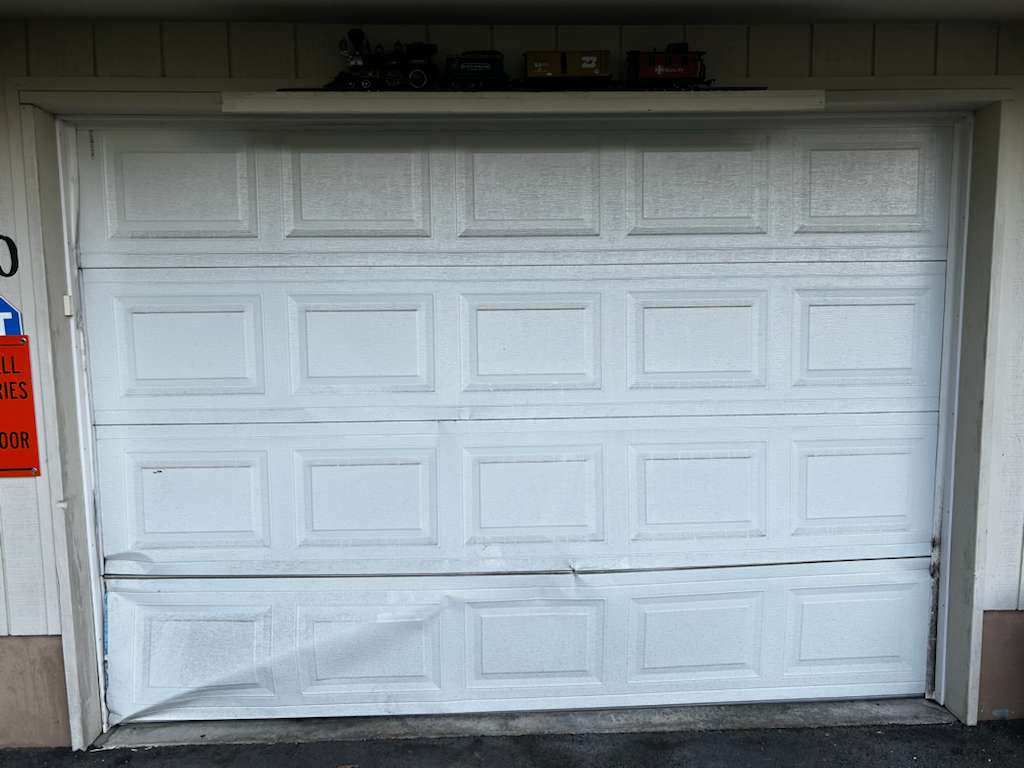
- The door looks crooked or uneven. This often means one spring has failed while the other still works, pulling the door off-balance.
- The door feels extremely heavy when lifted manually. If you disconnect the opener and the door is hard to lift, the springs are losing tension fast.
Additional Signals to Watch For
Loose or hanging cables are another strong indicator. Broken springs cause cable slack almost immediately. Similarly, visible rust, gaps in the coil, or a spring that looks stretched out of proportion all signal that failure is close.
Portland’s wet winters and temperature swings put extra stress on metal springs. However, the real damage often comes from moisture-driven rust. Rust increases friction on the coils, which speeds up wear and shortens overall spring life.
Don’t Delay — The Risks Compound Quickly
Delaying repairs puts extra strain on your opener motor and cables. In addition, a door with weak springs can drop unexpectedly — a real safety risk for children, pets, and vehicles.
For a broader look at warning signs beyond just springs, check out our guide on 5 warning signs your garage door needs professional repair.
The Professional Spring Repair Process Step by Step
When your spring system fails, knowing what to expect helps you feel confident and prepared. Here is exactly how a trained technician handles a spring service call from start to finish.
Step 1: Safety Assessment First
First, the technician secures the door in place. A broken spring puts the entire door under uneven tension. Because this tension can cause sudden movement, the tech clamps the door tracks before touching anything else.
They also inspect: – Cables and drums for fraying or slipping – Rollers and hinges for wear that could complicate the repair – The opener for strain damage caused by the broken spring
Step 2: Identifying the Right Spring Specs
Next, the technician measures the old spring carefully. Spring sizing is not guesswork. Specifically, they record the wire diameter, inside diameter, and overall length to match the correct replacement.
For torsion springs, they also note the wind direction — left-wound and right-wound springs are not interchangeable.
Step 3: Removing and Installing Springs
This is the most hazardous part of any spring service. In fact, improperly wound torsion springs can release thousands of inch-pounds of stored energy. Technicians use steel winding bars — never screwdrivers or improvised tools — to safely unwind and rewind the spring.
Extension springs require disconnecting the safety cable before removal. Both spring types demand precise tension calibration after installation. The Occupational Safety and Health Administration (OSHA) recognizes garage door spring tension as a serious mechanical hazard, which is why professional handling is essential.
Step 4: Testing and Fine-Tuning
Finally, the technician runs a full balance test. A properly balanced door should hold steady when lifted halfway and released. They also:
- Test the auto-reverse safety feature on the opener
- Lubricate all moving parts with a lithium-based spray
- Confirm smooth manual and automatic operation
For same-day availability when your door is stuck, visit our emergency garage door repair page. You can also explore our full Portland service area for local coverage details.
Spring Repair vs. Replacement: Portland OR Homeowner Options
When weighing spring repair vs. full replacement, the right choice depends on a few key factors. Age, spring type, and how often your door runs all play a role.
When Repair Makes Sense
Sometimes a single spring breaks while the rest of the hardware is still in good shape. In that case, a targeted fix is often the smarter move.
Repair tends to work best when:
- The spring is relatively new (under 5 years old)
- Only one spring has failed and the other components are sound
- The door itself is in good condition with no warping or panel damage
- Your current spring type fits your door’s weight and size
However, Portland’s wet climate accelerates rust and metal fatigue. A spring that looks fine may already be weakened.
When Full Replacement Is the Better Call
On the other hand, replacement often delivers better long-term value. Most torsion springs are rated for 10,000–20,000 cycles, roughly 7–10 years for an average household.
Consider full replacement if:
- Your springs are 7+ years old
- You’ve had multiple repairs in the past two years
- You’re upgrading to a heavier insulated door
- Both springs show visible rust, gaps, or deformation
In addition, replacing both springs at the same time prevents a second failure just weeks later — a common and frustrating outcome.
Repair vs. Replacement at a Glance
| Scenario | Best Option | Service Tier |
|---|---|---|
| One spring failed, door is young | Repair | Entry to standard-tier |
| Both springs old or rusted | Full replacement | Standard to mid-tier |
| Upgrading to heavier door | Full replacement | Mid-tier |
| Recurring failures within 2 years | Full replacement | Mid to upper-tier |
| Spring under 5 years, minor issue | Repair | Entry-tier |
Not sure which route fits your situation? Our low-cost garage door repair guide helps you understand what’s reasonable — and what’s a red flag. You can also contact us directly for a no-pressure assessment.
FAQ
About This Guide
This guide was researched and drafted with AI assistance, then reviewed for accuracy by the Garage Doors of Salem team. Information reflects local conditions in Salem. Last updated July 2026. For questions specific to your situation, contact us directly.
Garage Doors of Salem Salem, OR 📞 (503) 894-5657
Schedule your service today — our team is ready to help Portland-area homeowners get their doors moving safely again.